
Leon County Court Records After a Jail Arrest
Once a person is arrested and booked in Leon County, the case moves out of the sheriff's hands and into the court system. The Office of the State Attorney for the Second Judicial Circuit reviews the facts and decides what charges, if any, to file. Those filed charges open the case and create the court record. So the arrest is the start, but the court record is what tracks the charges through to a final outcome.
The booking side and the court side answer different questions. For who is in custody and the charges at booking, use the jail inmate records roster, and for the booking photo itself use the jail roster mugshots page. For the charges a prosecutor actually filed and how they changed, you need the court record. The state attorney's overview of arrest, intake, and charging explains the office's role.
The prosecutor's plain-English walkthrough of the process appears on the state attorney criminal justice page.
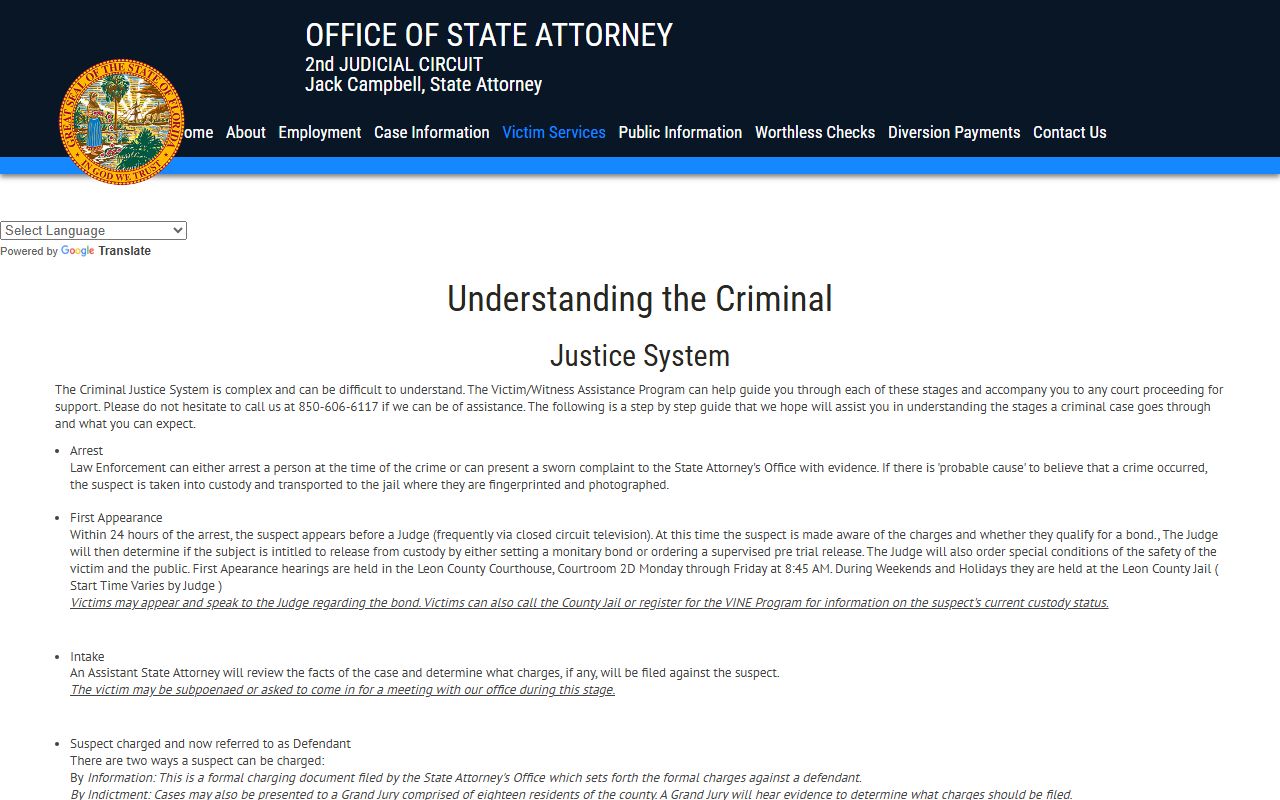
As that page lays out, the steps run from arrest to first appearance to the prosecutor's intake decision, which is where the court charge record begins.
How to Find Leon County Court Records After an Arrest
Court charges and their status live with the Clerk of Court, not the jail. The Leon County Clerk runs an online court case search, and the clerk's criminal division explains how the file is built after an arrest. The official case-search page returned access limits during research, so its exact fields are not listed here, but the search itself is the right starting point for a name or case number.
- Open the Leon County Clerk court case search.
- Search by the defendant name or, if you have it, the case number.
- Open the case and read the list of filed charges.
- Check each charge's level and current status on the progress docket.
If the online record is not available, the clerk lists customer-assistance numbers, 850-606-4070 for felonies and 850-606-4130 for misdemeanors and criminal traffic. For a statewide criminal history rather than a single county case, use the Florida Department of Law Enforcement search and pay its statewide fee.
Who Files the Charges After an Arrest
Leon County is part of the Second Judicial Circuit, which the State Attorney's Office serves along with five nearby counties. After an arrest, law enforcement can present a sworn complaint and evidence to that office, and the prosecutor's intake process decides which charges to file. The booking charge from the arrest can differ from what the prosecutor finally files, which is exactly why the court record matters more than the booking row for the legal outcome.
The Leon office sits at the county courthouse, and its contact details appear on the state attorney Leon County contact page.
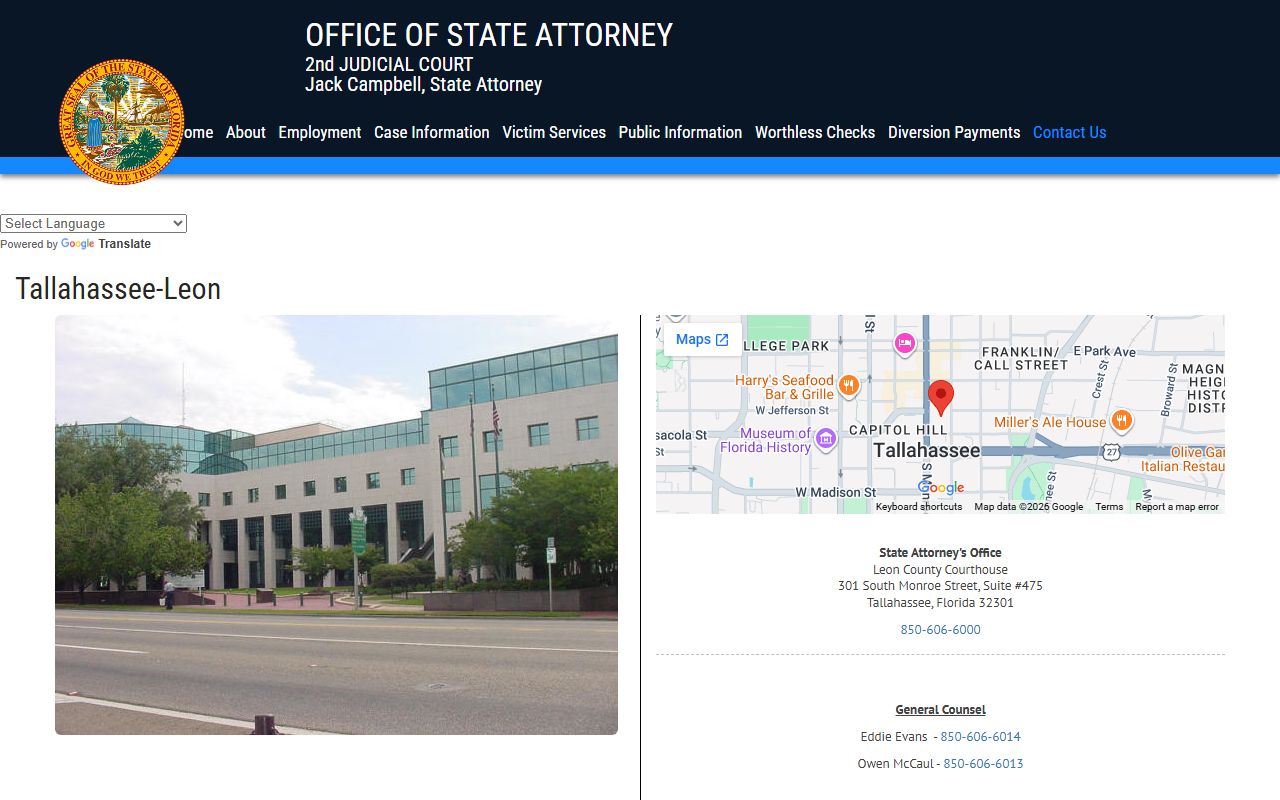
The contact page lists the courthouse suite and divisions, which is useful when a court record question is really a prosecutor-office question.
How Charges Get Filed: Complaint, Information, and Indictment
Walking forward from the arrest, the charge record opens when a charging document is filed. In Florida there are three main types. A prosecutor files an information for most felonies. A grand jury returns an indictment for the most serious cases. A complaint is the early accusing document that can start a matter. The table sums up who files each and what it covers.
| Complaint | Information | Indictment | |
|---|---|---|---|
| Filed By | Officer or prosecutor | State Attorney | Grand Jury |
| Common For | Early accusation | Many felonies | The most serious felonies |
| Starts | The case | The case | The case |
Charge Status in the Court Record
Charges are not fixed once they are filed. As a case moves, a charge can be amended, reduced, added, or dropped. The progress docket records each step, including hearings, the charging document, bond orders, the disposition, and any sentence. Remember that the booking charge on the jail roster can differ from the charge the prosecutor finally pursues, so always trust the court record for charge status.
| Status | What It Means |
|---|---|
| Pending | The charge or case is filed but not yet decided. |
| Amended or Reduced | The prosecutor or court changed or lowered the charge. |
| Dismissed | The court ends the charge so it does not go forward. |
| Nolle Prosequi | The state chooses not to proceed on that count or case. |
Bond and Release After an Arrest
At first appearance, which happens within 24 hours unless the person was already released, a judge can address bond and release conditions. The clerk's FAQ says most offenses are bondable under an approved bond schedule, while a judge may set a high amount or deny bond in some cases. For how to pay, the sheriff's FAQ points to the releasing office at 850-606-3526 and says a credit card can be used at the releasing area with the card and ID in hand. A list of bondsmen is kept in the releasing lobby.
| Bond Type | How It Works |
|---|---|
| Cash Bond | The full amount is posted in money to secure release. |
| Surety Bond | A licensed bail bond company posts the bond for a fee. |
| Supervised Pretrial Release | Release on conditions through the county's pretrial program. |
| No-Bond Hold | A hold or denied bond keeps the person in custody despite a local bond. |
Warrants That Lead to an Arrest
An outstanding warrant or a capias can lead to a booking at the county jail, and a failure to appear can put a person back in custody, sometimes without bond. The sheriff publishes a narrow warrant search for outstanding first- and second-degree felony warrants only. It leaves out warrants older than five years and those issued in the past two months, so a no-result there does not prove there is no warrant.
The official list is on the sheriff's warrant search page.
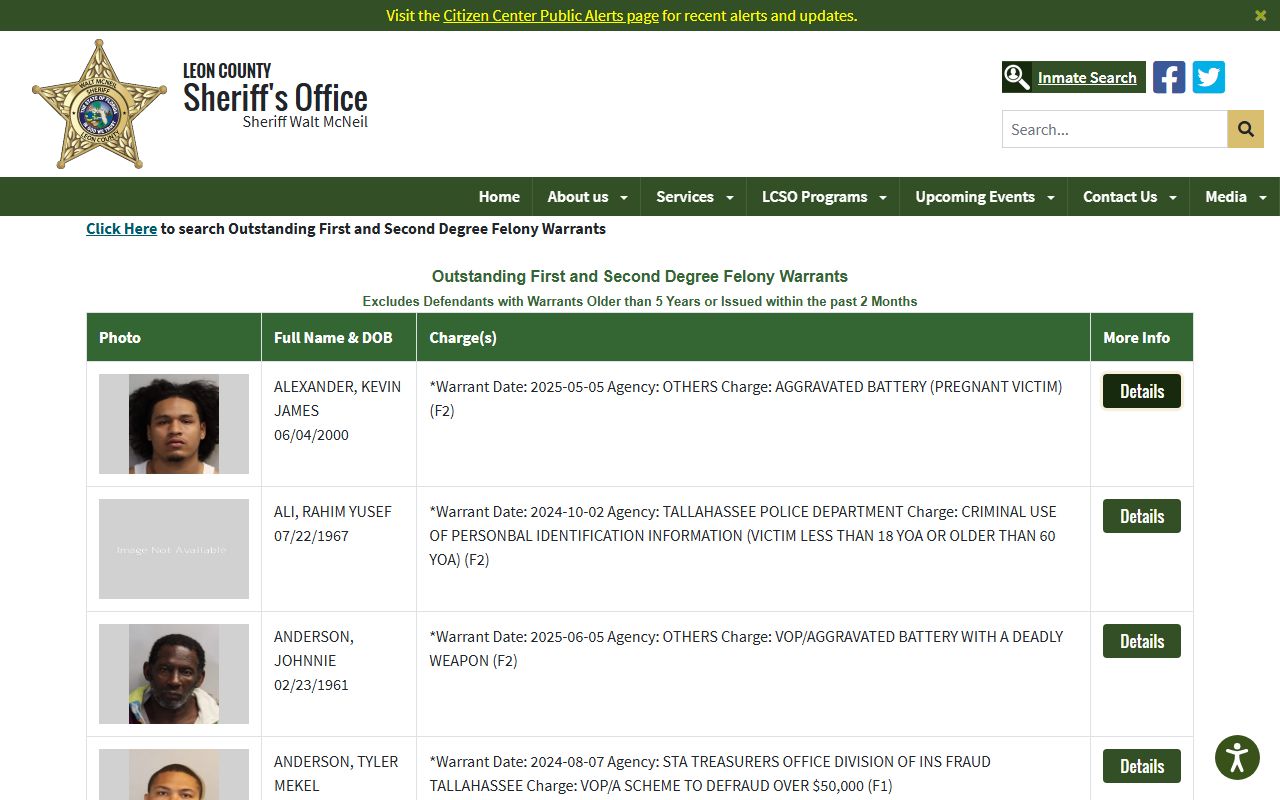
The sheriff's FAQ adds that warrant details are not given out except in person, and it directs people to turn themselves in at the detention facility with valid state ID. For legal questions about a warrant, speak with an attorney.
Charges vs. Convictions in the Court Record
Being arrested and charged is not the same as being convicted. A charge is an accusation. A conviction is a verdict or a plea. The court record can show charges that are still open, dropped, or reduced, none of which means guilt.
| Charge | Conviction | |
|---|---|---|
| Stage | Accusation | Verdict or plea |
| Burden of Proof | Probable cause | Beyond a reasonable doubt |
| Public Record | Yes | Yes |
Sealed vs. Expunged Court Records
Florida lets some people clear an eligible record after an arrest, through court-ordered sealing or expunction. Sealing restricts public access to a qualifying record. Expunction goes further and treats the record as removed. The state attorney's office publishes local instructions for sealing and expunging, and the two statutes set the rules.
| Sealed | Expunged | |
|---|---|---|
| Visibility | Hidden from public view | Treated as removed from public access |
| Law Enforcement | Limited access remains | Very limited access |
| Florida Statute | § 943.059 | § 943.0585 |
Certified Copies and Court Records Fees
Getting a copy of a court record after an arrest can carry a fee, and the cost depends on which office holds the record. The Clerk of Court charges copy and certification fees set in its official fee brochure, and its eCertify service can produce an electronic certified document when the image is available. The State Attorney's office has its own published fee schedule for prosecutor-office records. A statewide criminal history from the Florida Department of Law Enforcement is billed separately again.
| Office | Fee Basis |
|---|---|
| Clerk of Court | Copy and certification fees per the clerk's fee brochure |
| State Attorney | $25 per hour personnel, $50 per hour IT, $0.15 per hard-copy page, plus media costs |
| FDLE statewide history | $24 search fee plus $1 card processing online |
Note: juvenile, sealed, and other protected records can be withheld or redacted under court rules even when a fee is paid.
Background Checks and Court Records
A casual look at a court record is not the same as a regulated background check. Florida court access is governed by public-records law and court rules, and a formal statewide criminal history comes from the Florida Department of Law Enforcement for a fee. Court records found through a county case search are public, but they are not a screening report.
Important: This site is not a consumer reporting agency under the FCRA, and nothing here may be used for employment, housing, credit, or other FCRA-covered screening.
Restricted Court Records After an Arrest in Leon County
Some records after an arrest are not open to the public. Florida law and court rules can withhold juvenile matters, sealed or expunged cases, victim information, and active investigations. Public-records exemptions under the state statutes can also redact protected personal data. When a court record is missing or partly hidden, an exemption is often the reason rather than a gap in the file.